
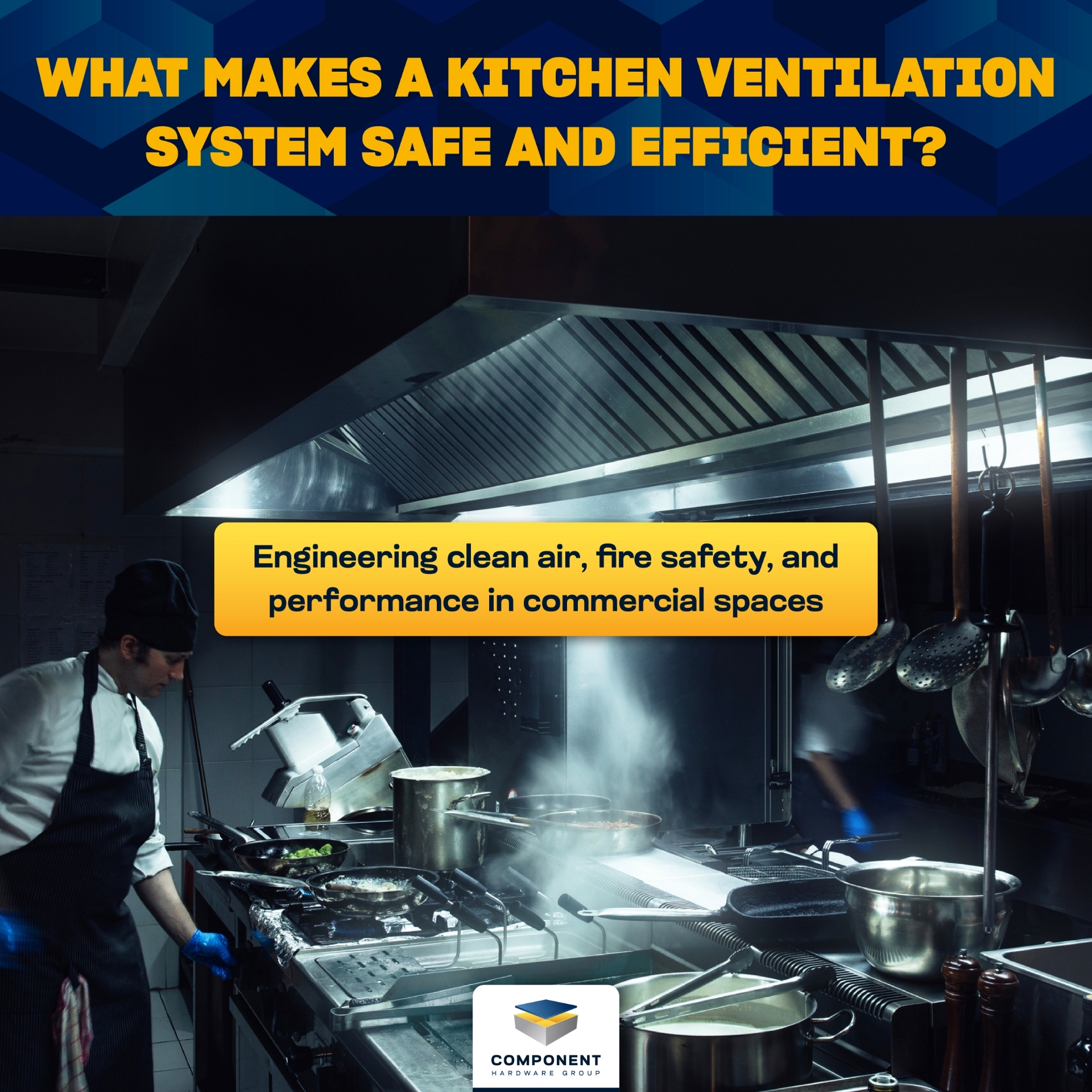
A commercial kitchen ventilation system does much more than remove smoke or odor. It’s an integrated safety and performance system responsible for maintaining air quality, preventing fires, and ensuring compliance with health and fire codes.
From fast-food chains to hospital kitchens, proper ventilation protects people, property, and productivity. Yet, few realize the engineering complexity behind that smooth, steady airflow above the cooking line.
Why Ventilation Engineering Matters
Commercial kitchens are high-stress environments.
They generate grease-laden vapors, heat, steam, and particulates that can quickly compromise safety if not managed correctly.
An efficient commercial kitchen ventilation system must:
- Capture airborne grease before it enters ductwork.
- Maintain consistent air pressure and temperature.
- Reduce energy consumption without sacrificing performance.
Inadequate design or maintenance can lead to fire hazards, equipment damage, and code violations. For engineers and facility managers, ventilation safety is both a design challenge and a compliance priority.
The Core Components of a Ventilation System
An effective system typically includes:
- Canopy hoods positioned strategically above cooking equipment.
- Grease filters that capture particulates at the source.
- Ductwork and exhaust fans that move contaminated air outdoors.
- Make-up air systems that replace exhausted air.
- Fire suppression integration for immediate response to flare-ups.
Each component must work in harmony. If one part is undersized or poorly balanced, the entire system’s performance suffers. This increases energy costs and reduces safety margins.
Grease Filtration: The First Line of Defense
Grease is the single greatest hazard in commercial kitchens. When vaporized grease cools inside ducts, it becomes flammable residue. That’s why baffle-style grease filters are engineered to separate grease from the air stream before it travels upward.
These filters rely on airflow dynamics, forcing air to change direction rapidly so that grease droplets collide with and adhere to the filter’s metal surfaces. The result: cleaner ducts and reduced fire risk.
Effective filters combine:
- High grease capture efficiency
- Low pressure drop (to maintain airflow)
- Durable, corrosion-resistant materials
Flame Gard® filters by CHG exemplify this principle, offering fire-arresting performance through stainless steel construction and easy-clean baffle design. Their engineering ensures safe operation while keeping energy use low and maintenance simple.
Airflow and Balance: Where Efficiency Begins
Efficiency in a commercial kitchen ventilation system starts with airflow balance.
Too much exhaust creates negative pressure, drawing conditioned air out of dining areas. Too little, and grease, heat, and odor linger in the workspace.
Engineers calculate the capture velocity required for each hood based on:
- The type and heat output of cooking equipment.
- The hood’s dimensions and mounting height.
- Airflow patterns within the room.
Advanced modeling, including computational fluid dynamics (CFD), helps designers visualize airflow and identify inefficiencies. Proper balancing not only saves energy but also improves employee comfort — a win for both operations and sustainability.
Energy Efficiency and Sustainability
Ventilation systems account for up to 30% of total kitchen energy use, making them a prime target for efficiency improvements.
Modern solutions like demand-controlled ventilation (DCV) adjust fan speeds automatically based on cooking activity, reducing energy consumption during off-peak hours.
Some systems integrate heat recovery to reuse exhaust heat for preheating make-up air, cutting HVAC costs significantly.
Even small design optimizations such as smoother duct interiors or more efficient grease filters contribute to overall energy performance.
Fire Safety
No aspect of ventilation design is more critical than fire prevention.
Grease accumulation, poor airflow, or improperly maintained filters can all increase the risk of ignition.
Key safety elements include:
- Noncombustible hood materials (typically stainless steel).
- Proper duct slope and drainage to prevent grease pooling.
- Automatic fire suppression integration within the hood system.
- Access doors that allow thorough duct cleaning.
Maintenance and Cleanability
Every ventilation system is only as good as its maintenance.
Engineers design for serviceability by incorporating:
- Easily removable baffle filters.
- Smooth duct surfaces that resist buildup.
- Grease collection troughs that drain effectively.
- Accessible fire suppression inspection points.
Routine cleaning and inspection keep systems operating efficiently and extend their lifespan. Systems designed with cleanability in mind reduce downtime and help kitchens maintain compliance without disrupting operations.
The Unseen Engineering That Protects Every Kitchen
In a well-designed kitchen, the air is clear, the temperature steady, and the equipment safe. And no one stops to think about why.
That’s the beauty of proper ventilation engineering: when it’s done right, it’s invisible.
Each hood, filter, and duct has been designed through testing, simulation, and refinement to do one simple thing: to protect people while keeping operations efficient.
The CHG Commitment: Safety, Reliability, and Support
At Component Hardware Group, our mission is to build products that help kitchens run safer and smarter.
Our Flame Gard® line represents decades of innovation in grease filtration and canopy hood components, developed to meet the demanding conditions of modern foodservice environments.
Through global engineering partnerships and quality assurance programs, CHG ensures that every component contributes to safer, more efficient operations. Because safety and reliability should never be an afterthought.
Final Thoughts
Safe, efficient kitchen ventilation is a matter of precision engineering.
From airflow balance to fire suppression, every detail counts.
By combining innovation, compliance, and durable design, CHG helps operators and OEMs build commercial kitchen ventilation systems that deliver long-term performance and peace of mind.
Ready to Optimize Your Kitchen Ventilation System?
Component Hardware Group offers Flame Gard® grease filters, access doors, and canopy hood solutions. All backed by over 40 years of engineering expertise.
Our team can help you identify the right components for safety, performance, and compliance. Contact CHG today to discuss your project or schedule a consultation with our ventilation specialists.


