
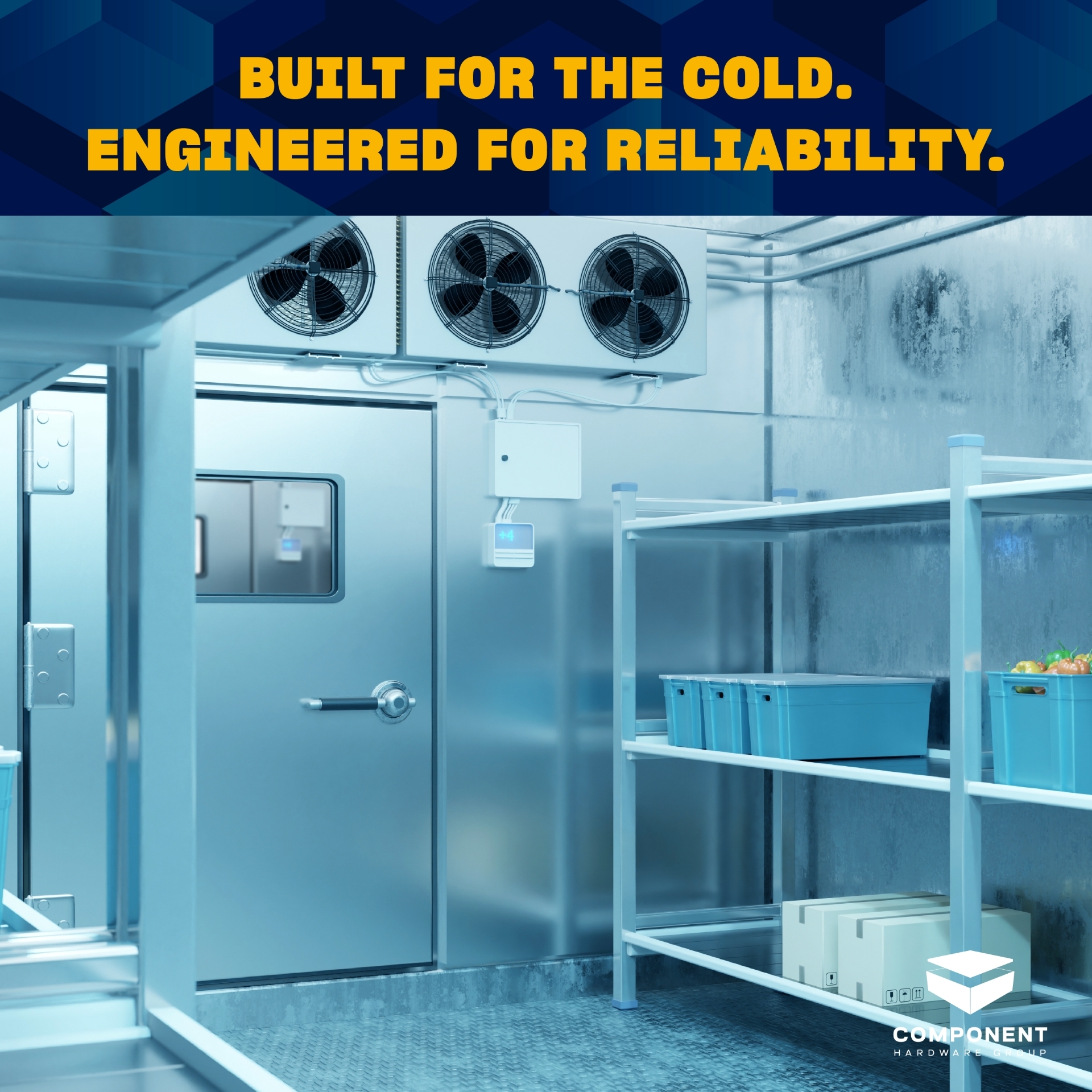
In commercial kitchens, grocery stores, and food distribution facilities, walk-in freezers are among the most mission-critical assets. They protect inventory, ensure food safety, and maintain cold chain integrity. But while the insulated panels and compressors get most of the attention, the hardware that keeps the system running smoothly is just as essential.
From door hinges and latches to gaskets and sweeps, walk-in freezer hardware must perform under extreme conditions. It endures constant temperature cycling, moisture exposure, frequent use, and even impacts from carts or heavy traffic. The wrong component can lead to air leaks, rising energy costs, and even product loss.
In this blog, we’ll break down what makes walk-in freezer hardware reliable, identify the most important types of hardware, and explain how to choose components that support long-term durability, safety, and efficiency.
Why Hardware Matters in Cold Storage
While walk-in freezer panels insulate and the compressor maintains temperature, it’s the hardware that enables the door to function correctly. If the door fails to seal, close, or operate smoothly, it puts the entire system at risk.
Common risks of poor-quality or worn-out freezer hardware include:
- Air leaks and frost buildup
- Increased energy consumption
- Damaged inventory
- Inconsistent temperature zones
- Door misalignment or failure to close
These issues result in operational delays, safety risks, and unnecessary expenses. That's why hardware selection is critical when specifying or maintaining a walk-in freezer system.
Key Hardware Components in a Walk-In Freezer
Let's take a closer look at the most important hardware categories and what makes each one built to last in a commercial setting.
1. Heavy-Duty Hinges
Function: Allow smooth, secure door operation even with frequent use.
What to Look For:
- Adjustable spring tension or cam-lift designs to ensure positive door closure
- Corrosion-resistant materials (like stainless steel or zinc-plated steel)
- Field-adjustable mounting plates for easy alignment
- Options rated for low-temperature performance and defrost compatibility
Hinges take the brunt of daily use. Inconsistent closing leads to air leaks and temperature loss. A quality hinge ensures smooth, self-closing motion that preserves interior conditions.
2. Latches and Handles
Function: Securely seal the door and provide ergonomic access.
What to Look For:
- Positive-latching systems with smooth open/close functionality
- Safety features like inside releases for personnel safety
- Durable handle grips for repeated use
Latches are responsible for keeping the door sealed, especially when the freezer cycles between high and low humidity. CHG's Keil® brand latches are engineered for reliability in high-use environments.
3. Gaskets and Door Seals
Function: Provide an airtight seal between the door and frame.
What to Look For:
- Magnetic or compression-style gaskets rated for low temperatures
- Durable, tear-resistant materials that maintain flexibility over time
- Easy-to-replace designs for efficient maintenance
- Compatibility with sweep seals at the door bottom
Gaskets are often the first hardware component to wear out. A damaged or stiff gasket leads to condensation, ice buildup, and overworked compressors. Quality seals reduce air infiltration and keep operating costs in check.
4. Door Closers
Function: Ensure automatic, controlled closing to maintain temperature control.
What to Look For:
- Adjustable hydraulic closers for smooth, quiet operation
- Systems that can handle heavy or oversized doors
- Mounting options that work in tight kitchen layouts
In busy environments, doors may be left ajar if not self-closing. Closers help maintain consistent temperature and reduce human error.
5. Thresholds and Sweeps
Function: Seal the base of the door and protect against moisture and air loss.
What to Look For:
- Aluminum or stainless-steel thresholds with thermal breaks
- Flexible rubber sweeps that resist cracking or hardening
- Easy installation for retrofit or replacement situations
Cold air sinks. If the base of the door isn’t properly sealed, temperature control suffers, and frost builds up, especially in humid kitchens.
What Makes Commercial-Grade Freezer Hardware Different?
The hardware used in commercial walk-ins must go far beyond residential-grade or general-purpose components.
Here’s what separates true commercial-quality hardware from the rest:
- Material Performance
Industrial-grade metals, anti-corrosion coatings, and low-temperature-rated plastics prevent degradation in freezing and wet conditions. - Cycle Testing
Commercial components are tested for tens of thousands of open/close cycles, ensuring they can withstand years of use. - Precision Fit
The best systems are engineered to minimize gaps, maintain alignment, and reduce installation errors. - Safety Features
Emergency inside releases support employee safety in walk-in environments. - Ease of Maintenance
Commercial hardware is modular, field-replaceable, and easy to adjust, reducing downtime and service costs.
CHG’s Expertise in Cold Storage Hardware
Component Hardware Group (CHG) has long been a trusted partner to OEMs and operators building performance-critical cold storage systems. Our walk-in freezer hardware portfolio includes:
- Keil® Hinges, Latches, and Door Closers – Trusted in the foodservice industry for their durability and smooth operation
- Custom gaskets and sealing solutions – Tailored to specific door types and freezer configurations
- Stainless steel fabrication hardware – For rugged, corrosion-resistant performance
We also support integrated system design through our custom assembly capabilities, allowing OEMs to combine multiple components into a pre-assembled solution that streamlines production and improves performance.
How to Extend the Life of Your Walk-In Freezer Hardware
Hardware failure in a walk-in freezer can happen suddenly—but often, the warning signs are there. Here’s how to keep systems running smoothly:
- Inspect hardware regularly for cracks, misalignment, or loss of sealing pressure.
- Clean gaskets and sweeps with mild solutions to prevent residue buildup and tearing.
- Lubricate moving parts, such as hinges and latches, as recommended by the manufacturer.
- Replace gaskets and door closers proactively before ice buildup or high energy costs occur.
CHG offers replacement hardware components for both OEM installations and retrofits, ensuring you can maintain uptime without the need for extensive redesigns.
Final Thoughts: Build Freezers That Operators Can Count On
Walk-in freezer hardware serves as a barrier that prevents heat from escaping, preserves food safety, and supports energy efficiency.
Choose hardware engineered for real-world performance. This way, you can be sure that you’re building equipment that operators can trust, day in and day out.
Want to upgrade your walk-in freezer systems with hardware that works as hard as your team?
Contact CHG to explore commercial-grade solutions designed for optimal performance, efficiency, and durability.


