
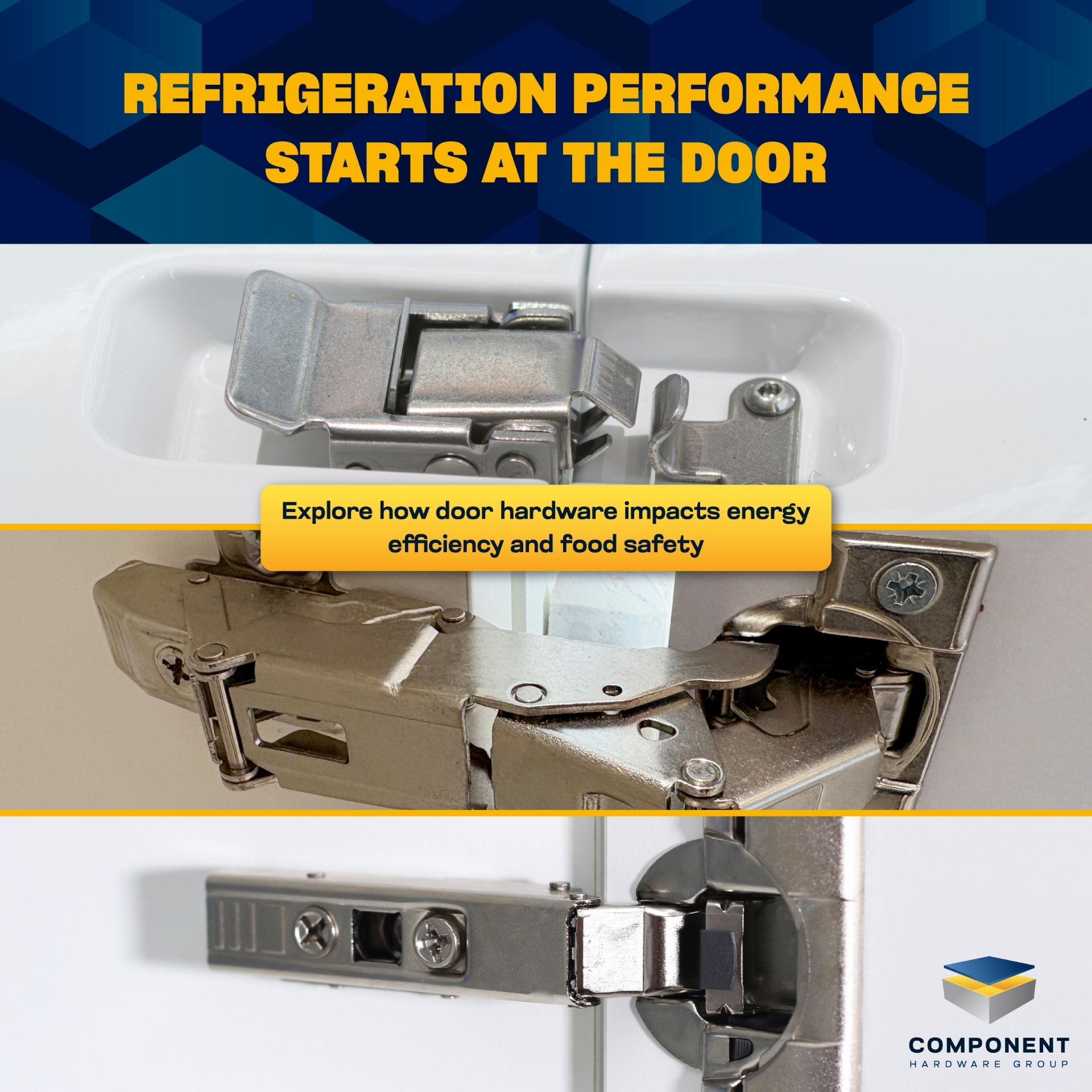
Commercial refrigeration systems operate around the clock to protect food quality, ensure safety, and manage operating costs. While compressors, refrigerants, and insulation often get the most attention, one critical factor is frequently overlooked: door hardware.
Hinges, latches, and gaskets may seem like small components, but they play a crucial role in maintaining temperature stability, enhancing energy efficiency, and extending overall equipment longevity. When door hardware functions properly, refrigeration systems operate efficiently. When it doesn't, the consequences show up quickly. They show up in rising energy bills, inconsistent temperatures, and premature equipment wear.
This article examines the impact of commercial refrigeration door hardware on performance, the importance of quality, and how purpose-built hardware solutions enable refrigeration systems to operate reliably in demanding commercial environments.
Why Door Hardware Matters in Commercial Refrigeration
Every time a refrigerator or freezer door opens, conditioned air escapes. Every time it closes, the system must recover. In high-traffic commercial kitchens, warehouses, and foodservice operations, doors can open hundreds of times per day.
Door hardware directly affects how well those doors close, seal, and stay aligned over time. When hardware begins to wear or fail, the refrigeration system must work harder to compensate, often without operators realizing the root cause.
Quality door hardware helps ensure:
- Consistent internal temperatures
- Reduced compressor run time
- Lower energy consumption
- Longer equipment life
In short, door hardware serves as a frontline defense of refrigeration performance.
How Failing Door Hardware Affects Temperature Control
Temperature consistency is essential in commercial refrigeration. Even small fluctuations can compromise food quality, increase the risk of spoilage, and strain refrigeration components.
When door hardware wears out or becomes misaligned, several issues emerge:
Poor Door Closure
Worn hinges or weakened latches can prevent doors from fully closing. Even small gaps allow cold air to escape continuously, forcing compressors to cycle more frequently.
Misalignment
Sagging doors, often caused by low-quality hinges, create uneven sealing surfaces. This leads to temperature stratification inside the unit—cold spots near the evaporator and warmer zones elsewhere.
Delayed Recovery Times
When doors don't seal properly, refrigeration systems take longer to return to set temperatures after each opening, increasing energy use and mechanical stress.
Over time, these issues compound, shortening the life of both the refrigeration unit and its internal components.
The Importance of Tight Seals and Proper Alignment
Door gaskets are only effective if the door closes evenly and consistently. Even the best gasket materials can't compensate for poor alignment or weak hardware.
Hinges Set the Foundation
High-quality hinges maintain proper door alignment under repeated use. In commercial environments where doors are opened aggressively, hinges must support:
- Heavy insulated doors
- Constant movement
- Temperature swings
Precision-engineered hinges ensure that doors return to their correct position every time they close.
Latches Create Consistent Sealing Pressure
Latches apply the force needed to compress gaskets evenly. Inadequate latching pressure results in partial seals, air leaks, and frost buildup.
Together, hinges and latches ensure that gaskets do their job—maintaining a tight thermal barrier between refrigerated and ambient spaces.
Hardware Designed for Frequent Use
Commercial refrigeration doors are not used gently. They are opened with full hands, bumped by carts, and exposed to constant vibration. Hardware designed for light-duty or residential use simply cannot withstand this level of activity.
Purpose-built commercial hardware is engineered to handle:
- Thousands of open/close cycles
- Impact and vibration from carts and equipment
- Repeated temperature changes from ambient to subzero
Keil refrigeration hardware is designed with these realities in mind, offering durable hinges and latch solutions that maintain performance even under heavy daily use.
Corrosion Resistance in Cold, Wet Environments
Refrigeration environments are uniquely harsh on metal components. Condensation, washdowns, cleaning chemicals, and temperature fluctuations create ideal conditions for corrosion.
Low-quality hardware made from untreated steel or inferior alloys can corrode quickly, leading to:
- Reduced structural integrity
- Increased friction and wear
- Hardware seizure or failure
High-quality refrigeration hardware utilizes corrosion-resistant materials and finishes specifically designed to withstand environments with high moisture content. Stainless steel components and protective coatings help ensure long-term reliability, even in walk-in coolers and freezers that are frequently exposed to cleaning cycles.
Energy Efficiency Starts at the Door
Energy costs are one of the largest operating expenses in commercial refrigeration. While insulation and compressors are major contributors, door performance has a significant impact on energy efficiency.
How Door Hardware Affects Energy Use
- Poorly sealed doors allow cold air loss
- Misaligned doors increase compressor run time
- Frequent cycling accelerates wear on refrigeration systems
Quality door hardware ensures doors close quickly and completely, minimizing air exchange and reducing unnecessary energy consumption.
The Compounding Effect
Even minor air leaks can translate into substantial energy losses over time. In facilities with multiple refrigeration units, upgrading door hardware can yield measurable energy savings throughout operations.
Extending Equipment Life Through Better Hardware
Refrigeration systems are designed to operate within specific temperature and workload parameters. When door hardware fails, systems operate outside those parameters more often, accelerating wear.
Reliable door hardware helps:
- Reduce compressor cycling
- Maintain stable operating conditions
- Lower the risk of premature component failure
By minimizing strain on refrigeration systems, quality hardware extends equipment lifespan and reduces maintenance costs over time.
Why Upgrading Hardware Makes Sense for Aging Equipment
As refrigeration equipment ages, door hardware is often one of the first components to degrade. Hinges loosen, latches lose tension, and seals become inconsistent.
Upgrading door hardware can:
- Restore proper sealing without replacing the entire unit
- Improve temperature consistency
- Reduce energy costs
- Extend the useful life of existing equipment
For many operators, hardware upgrades offer one of the highest returns on investment in refrigeration maintenance.
Built for Performance in Demanding Environments
Keil's commercial refrigeration hardware solutions are engineered specifically for foodservice and commercial applications where reliability matters. Designed to withstand frequent use, corrosive environments, and demanding operating conditions, these components help refrigeration systems perform as intended—day after day.
By focusing on durability, alignment, and sealing performance, quality door hardware supports:
- Temperature stability
- Energy efficiency
- Long-term system reliability
Small Components, Big Impact
Commercial refrigeration performance depends on more than just compressors and insulation. Door hardware plays a critical role in maintaining system efficiency, protecting food safety, and controlling operational costs.
Investing in high-quality hinges, latches, and sealing systems is both a maintenance decision and a performance strategy. When doors close properly, refrigeration systems operate more efficiently, last longer, and cost less to maintain.
Don’t let worn hardware compromise your refrigeration performance. CHG's Keil-branded hinges, latches, and gaskets are engineered for durability, efficiency, and food safety.


