
When equipment starts showing wear in the field, the problem is not always where people expect it to be. It is not always the frame, fabrication, or the major system components.
Sometimes it is the hinge that loosens too quickly. The latch that no longer closes cleanly. The handle that feels flimsy after repeated use. The small piece of hardware that looked fine on a spec sheet, but becomes a constant frustration once the equipment is in service.
That is the thing about cabinet hardware in demanding environments: it gets tested fast.
Cabinet Hardware: The Hardware Gets Used More Than You Think
Cabinet hardware is easy to overlook because it does not usually drive the sale or dominate the design conversation. But it affects how the equipment is used every single day.
Doors open and close constantly. Access panels need to stay secure while still allowing service access. Operators expect hardware to feel dependable. Technicians need components that do not fight them during maintenance.
When those details are not right, people notice.
Not because they are thinking about hinges or latches specifically, but because the equipment starts to feel harder to use, harder to maintain, or less durable than expected.
Demanding Conditions Make Small Problems Show Up Fast
In high-use environments, hardware is rarely exposed to ideal conditions. It may involve moisture, frequent cleaning, grease, repetitive motion, vibration, heavy traffic, or a combination of all of them. That is why selecting cabinet hardware based on dimensions alone is rarely enough.
A part can technically fit and still be the wrong choice for the application. The better question is whether it fits the way the equipment will actually be used.
- Will the panel be opened constantly?
- Does the latch need to hold up under repeated closure?
- Will the handle be used with wet hands, gloved hands, or in tight working conditions?
- Will service teams need fast, reliable access?
These are the questions that lead to better decisions.
Better Hardware Decisions Start Earlier
The teams that achieve the best long-term performance with cabinet hardware usually do not treat it as a late-stage detail.
They look at hardware early, while there is still time to think through use conditions, maintenance needs, and standardization opportunities across builds.
That is especially important for OEMs and fabricators producing equipment that has to perform reliably under daily wear. When hardware choices are made with the real environment in mind, the finished product is more likely to hold up the way it should.
Choosing the Right Components for the Job
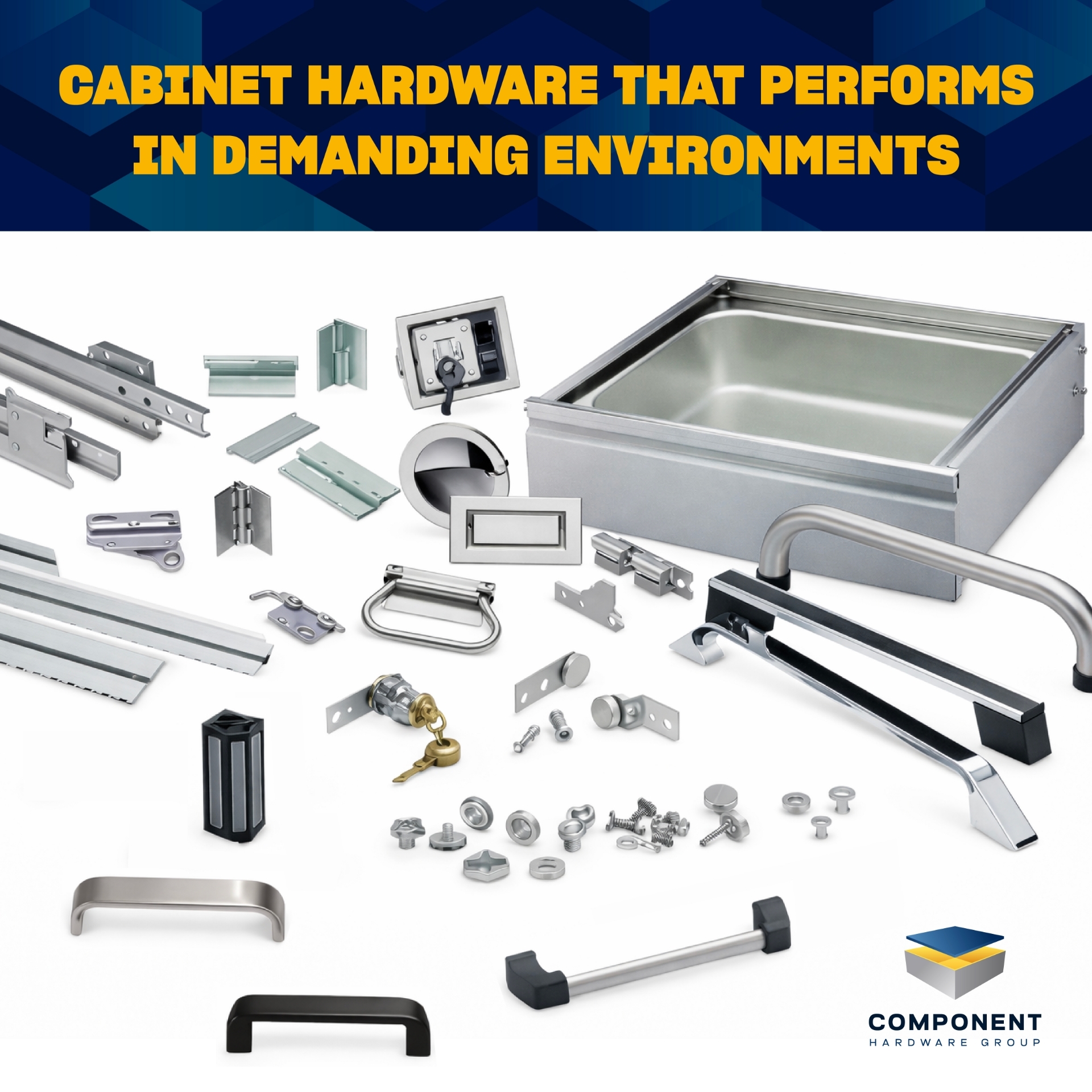
CHG's cabinet hardware offering includes categories such as catches, handles and pulls, hinges, latches, locks, and sliding door hardware, giving OEMs and fabricators access to components that support a wide range of equipment applications.
More importantly, component selection does not have to happen in a vacuum. When teams are trying to balance performance, usability, and manufacturability, the right support can help them make smarter decisions before small hardware issues turn into bigger field problems.
The Bottom Line
Cabinet hardware may not be the most visible part of a build, but it is one of the most used. And in demanding environments, the most-used parts are often the ones that shape the day-to-day experience of the equipment.
If the hardware is right, people may never think about it. If it is wrong, they will notice quickly.
Do not let small hardware decisions create bigger problems later. If you are building equipment that needs to withstand constant use, CHG can help you find cabinet hardware that meets the application, supports performance, and simplifies the path from design to production.


